How to Start a Food Business in India: A Step-by-Step Guide
India's food industry is booming — from home-based tiffin services to packaged snack brands going national, entrepreneurs across the country are turning their culinary passion into profitable ventures. But starting a food business isn't just about a great recipe. It requires the right planning, licensing, and strategy to turn an idea into a sustainable brand.
Here's a complete step-by-step guide to help you launch your food business in India the right way.
Key Industry Drivers in India
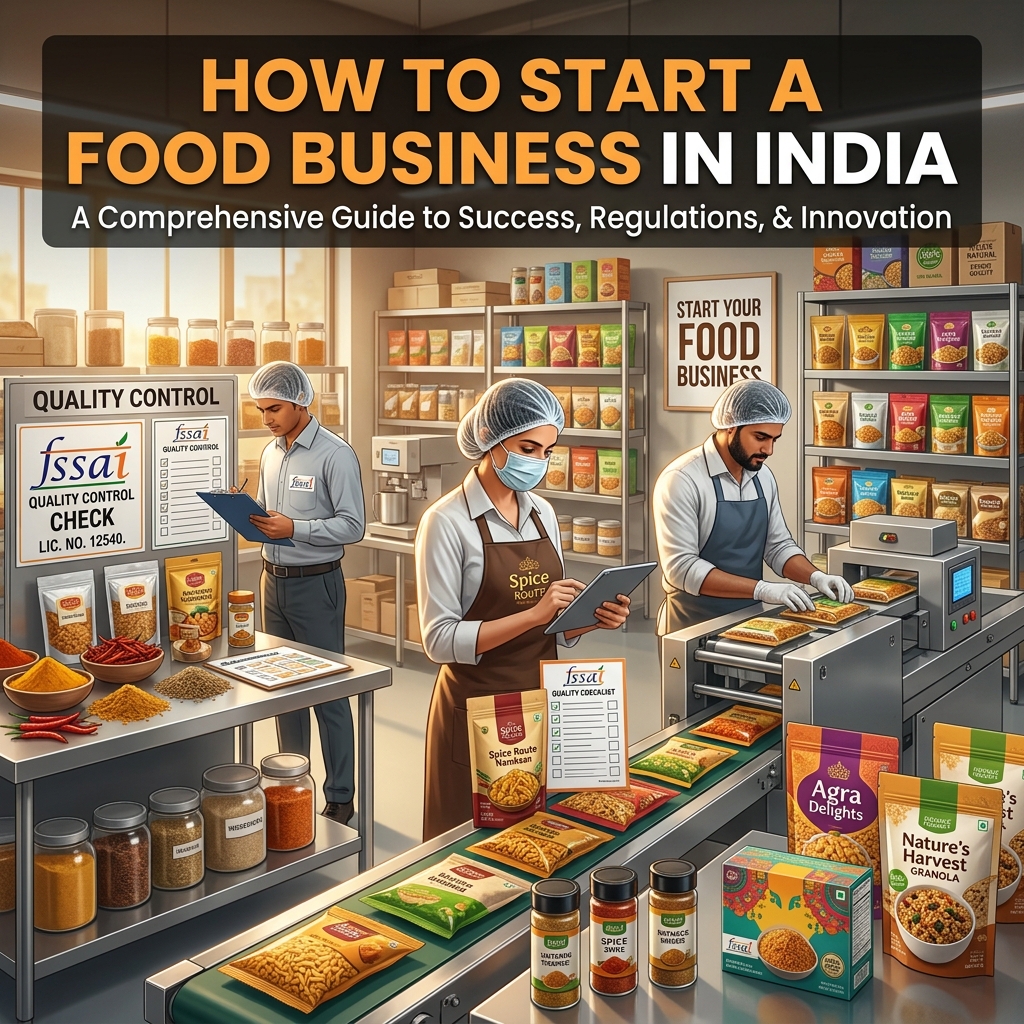
India represents one of the largest consumer markets in the world. With increasing urbanization, rapid growth of quick-commerce platforms, and growing demand for health-conscious packaged products, the entry barrier for new food brands has never been more dynamic.
However, compliance and quality standards are non-negotiable. Building your business foundation on strong food safety, proper licensing, and standardized manufacturing ensures long-term customer trust and investor interest.
1. Identify Your Niche and Validate Your Idea
Before investing money, get clarity on what you want to sell and who you're selling to. Ask yourself:
- What food category excites you the most — snacks, beverages, bakery, ready-to-eat meals, sauces, or health foods?
- Is there real demand for this product in your target market?
- What gap or problem does your product solve better than existing options?
Popular categories currently seeing strong growth in India include healthy snacking, regional/ethnic foods, functional beverages, gluten-free and millet-based products, and ready-to-cook meal kits. Spend time researching trends, talking to potential customers, and testing your idea at small scale — a local market stall, a pop-up, or even friends and family — before committing to full production.
2. Choose a Business Structure and Register Your Company
Decide on a legal structure for your business. Common options in India include:
- Sole Proprietorship – simplest, ideal for small home-based businesses
- Partnership Firm – for two or more co-founders
- Limited Liability Partnership (LLP) – limited liability with flexibility
- Private Limited Company – best suited if you plan to raise investment later
Choosing the right structure early affects your taxation, liability, and ability to raise funds down the line, so it's worth consulting a professional if you're unsure.
3. Get Your FSSAI License — The Most Important Step
No food business in India can legally operate without registration or licensing from the Food Safety and Standards Authority of India (FSSAI). The type of license depends on your business size and turnover:
- Basic Registration – for small businesses/home kitchens with turnover up to ₹12 lakh/year
- State License – for medium-sized businesses operating within one state
- Central License – for large manufacturers, importers/exporters, or businesses operating across multiple states
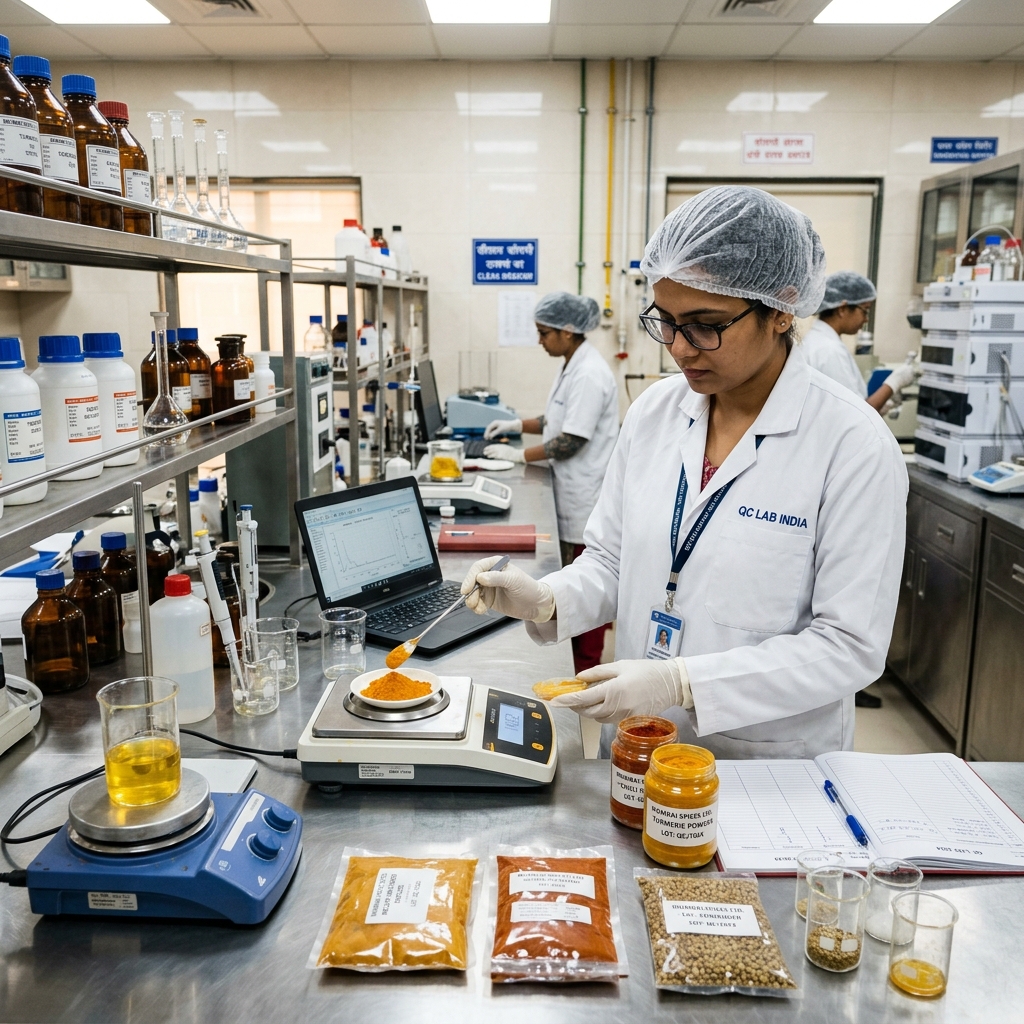
Modern food testing lab for FSSAI compliance and ingredient safety checks.
Along with FSSAI, you'll typically also need:
- GST registration
- Shop and Establishment license
- Fire NOC (if you run a manufacturing unit or commercial kitchen)
- Trademark registration (optional, but recommended to protect your brand name)
FSSAI basic registration usually takes 7–30 days depending on documentation, so it's best to apply early in your planning process.
4. Develop and Perfect Your Product
Product development is where your idea becomes a repeatable, sellable product. This stage includes:
- Recipe standardization – documenting exact quantities so every batch tastes the same
- Shelf-life testing – understanding how long your product stays fresh and safe
- Multiple batch trials – testing taste, texture, and consistency at different scales
Many first-time founders work with a food consultant or formulation expert at this stage, since scaling a home recipe for commercial production often requires adjustments in ingredients, processing methods, and equipment.
5. Decide How You'll Manufacture
You have two broad choices:
- In-house production – gives you full control over quality, but needs investment in kitchen infrastructure, equipment, and staff
- Contract manufacturing – you partner with an existing manufacturer to produce your product under your brand. This is faster, more affordable, and popular among new food brands entering the market
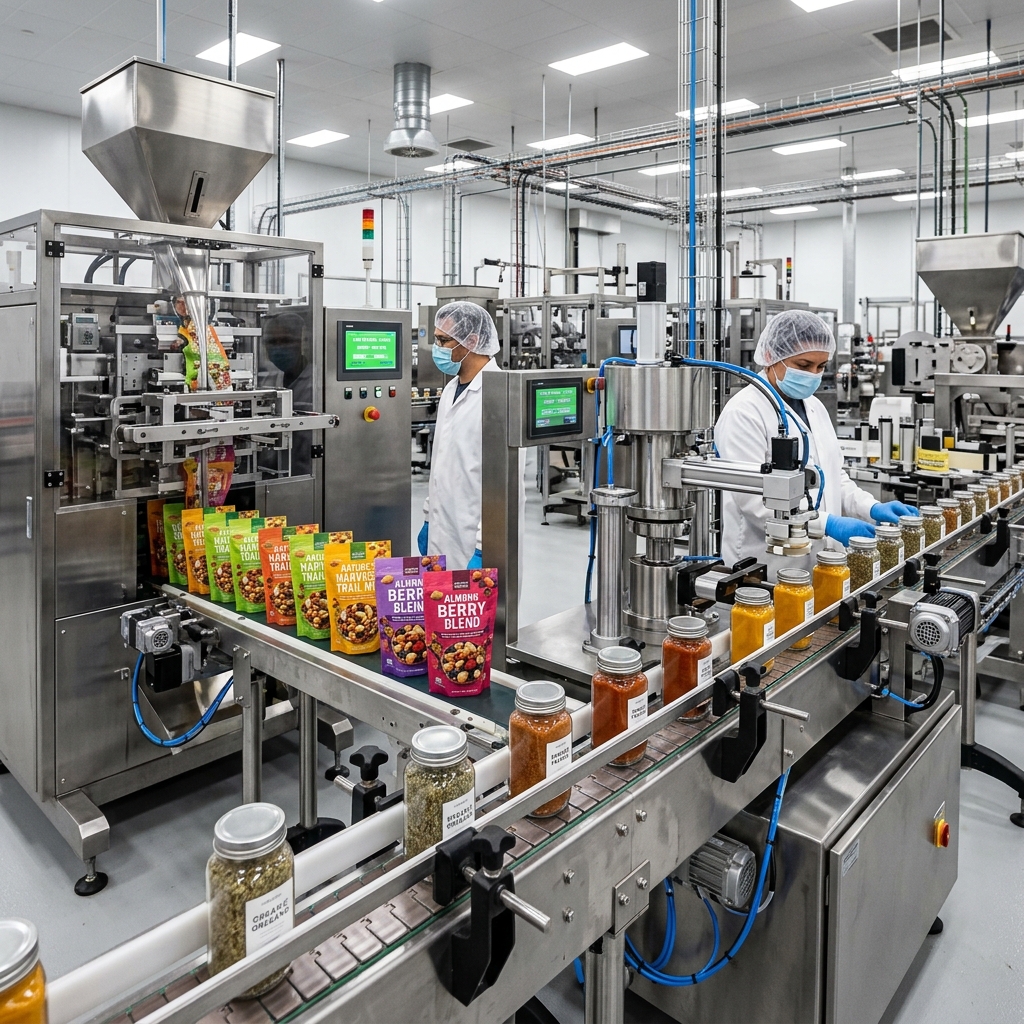
Hygienic contract packaging line filling and sealing products.
Many successful Indian food startups begin with contract manufacturing to keep costs low and only invest in their own facility once demand is proven.
6. Design Packaging That Sells
Packaging isn't just protection — it's often the first thing that convinces a customer to pick up your product. Good packaging should include:
- Clear, attractive design that reflects your brand identity
- FSSAI license number and mandatory labelling (ingredients, nutritional information, allergens, batch number, manufacturing/expiry date)
- Practical, food-safe materials suited to your product's shelf life
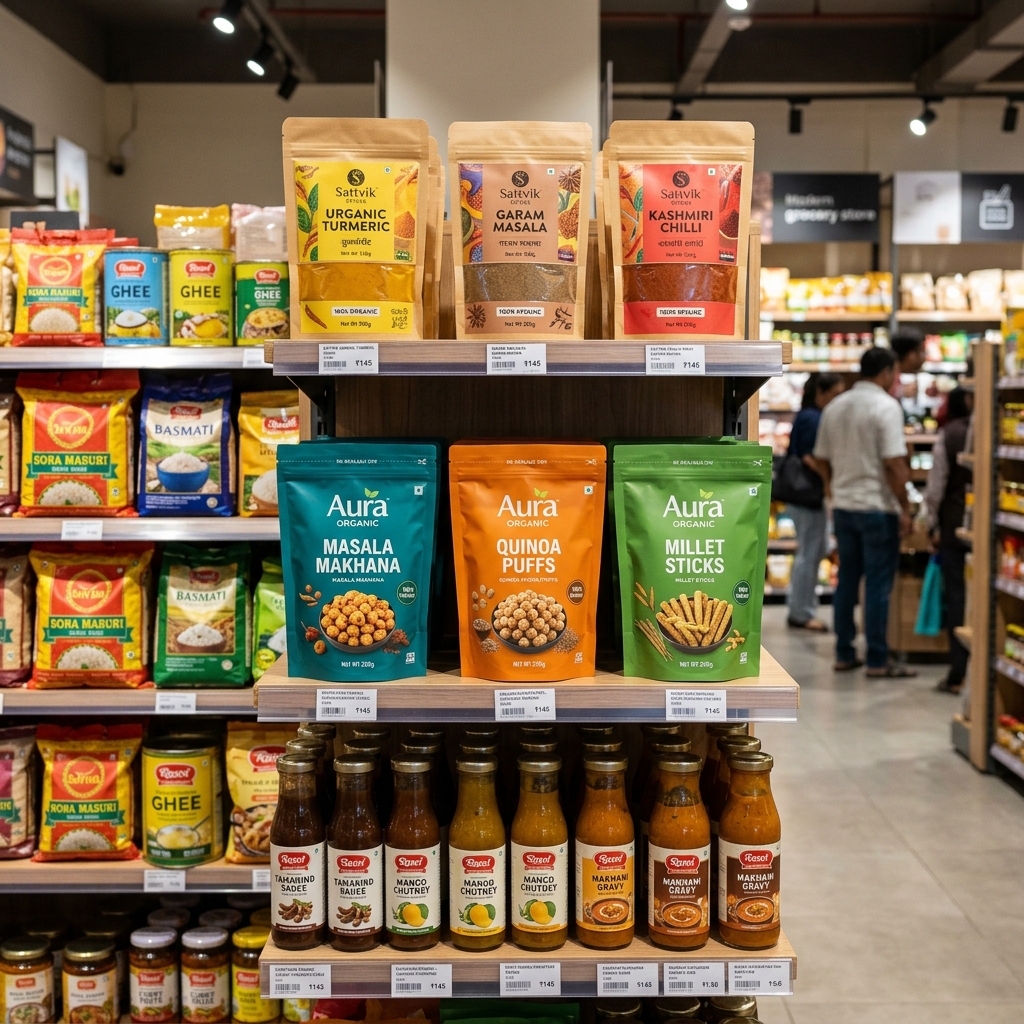
Modern shelf-ready pouch and container packaging for retail placement.
7. Price Your Product Strategically
Calculate your total cost of production — raw materials, packaging, labour, logistics, and marketing — before deciding your price. Common pricing approaches include:
- Cost-plus pricing – adding a fixed margin over your production cost
- Competitive pricing – aligning with what similar products charge
- Value-based pricing – pricing according to the perceived value/quality you offer
Getting this right early prevents underpricing (which hurts margins) or overpricing (which hurts sales).
8. Build Your Brand and Go to Market
A food business today needs more than a good product — it needs a story customers connect with. Focus on:
- A memorable brand name and visual identity
- A website and active social media presence
- Sampling and partnerships with local stores, farmers' markets, or food festivals to build initial traction
- Online marketplaces and D2C channels to reach customers beyond your city
9. Track Performance and Improve Continuously
Once you're live in the market, keep a close eye on:
- Sales trends and repeat purchase rate
- Customer feedback and reviews
- Wastage/returns
- Social media engagement
Use this data to refine your recipe, packaging, and pricing over time.
10. Scale Smartly
Once you have consistent demand, look at scaling through:
- Expanding production capacity via contract manufacturers
- Adding new flavours or product lines
- Entering retail chains and supermarkets
- Growing your e-commerce and quick-commerce presence
Food Business Launch Checklist
Track your essential steps before going to market:
Ready to start your food business asset-light?
Partner with Nera Foods for compliant, scalable contract food manufacturing and packaging. Get a custom quotation within 24 hours.
Request QuotationFinal Thoughts
Starting a food business in India takes more than passion for cooking — it takes planning, compliance, and patience. From getting your FSSAI license to perfecting your recipe and choosing the right manufacturing route, each step builds the foundation for a brand that can scale sustainably. Start small, validate often, and grow step by step.
Sources: Food Safety and Standards Authority of India (FSSAI); Ministry of Food Processing Industries (MoFPI); Indian Retail & FMCG Industry Reports.